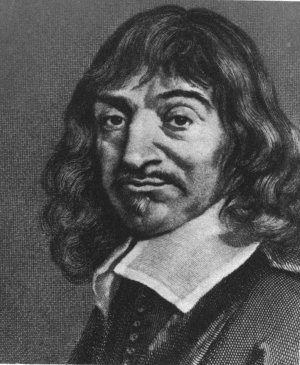
Descartes, in his seek for the kind of knowledge that cannot be denied and that we can safely use as a base for the development for more knowledge, created the method of reasoning onwards called cartesian skepticism.
"I will suppose... some malicious demon of the utmost power and cunning has employed all his energies in order to deceive me. I shall think that the sky, the air, the earth, colours, shapes, sounds and all external things are merely the delusions of dreams which he has devised to ensnare my judgement." René Descartes - Meditations on First Philosophy: First Meditation
The results of his skepticism is that he was only left with the sole knowledge of his own existence, hence his acclaimed phrase: cogito ergo sum (i think, therefore I am).
Unluckily for him, the limitations of his reasoning method didn't allow him to go any further. One kind of workaround he though of was the idea that anything that is so clearly true as our own consciousness must be true as well, and that the safekeeper of us not getting confused by the Demon (see quotation above), is God himself. I find it curious that God is thus taken as a foundation for the reconstruction of scientific knowledge.
One example of cartesian skepticism is the brain in a vat story.

1 comment:
gatofilo!
Coming soon
Post a Comment